HTTP Status Codes
HTTP 416 Range Not Satisfiable
Range Not Satisfiable — the server cannot fulfill the byte range specified in the request
416 is returned in response to a ranged request when the specified byte range does not overlap with the resource. The response includes a Content-Range header indicating the actual resource size.
Visual summary
A quick reference view of how HTTP 416 works: A target bracket or pointer aiming at empty space past the end of a document.
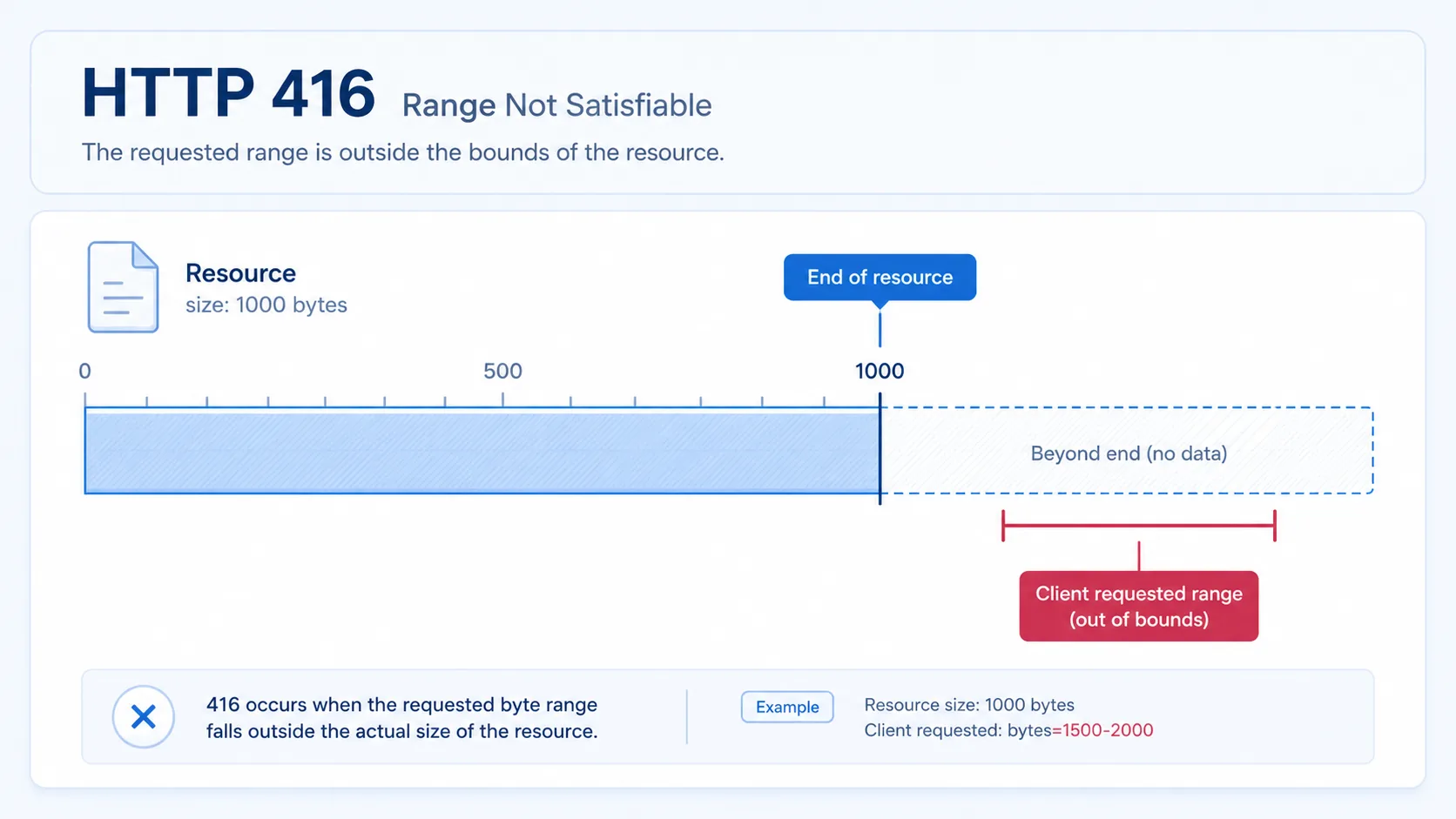
What 416 Means
The shortest useful reading of this status code.
Range Not Satisfiable means the server cannot fulfill the byte range specified in the request.
This status falls into the 4xx class, indicating a client-side error outcome for the request.
Quick read
Range Not Satisfiable
the server cannot fulfill the byte range specified in the request
How to fix 416
General informational guidance, not professional advice. Commands can affect your system or data — back up first and proceed at your own risk. FixerCode is an independent reference, not affiliated with any vendor mentioned.
Read the real resource size
The 416 response carries a Content-Range header in the form bytes */total. Use it to learn the current length before re-requesting.
curl -I -H 'Range: bytes=0-1' https://example.com/fileRequest a range within that size
Ask only for bytes that exist. A resumed download must start from an offset below the actual file length.
Clear a stale cached size
If the file changed on the server, the client or CDN may still hold the old length. Clear that cache so the next request reads the current size.
Serve ranges correctly if you own the server
Make sure the origin returns Accept-Ranges and an accurate Content-Length so clients compute valid ranges.
Technical Context
How this status behaves without turning the page into a repair guide.
Standard usage
HTTP range requests allow clients to request specific byte ranges of a resource, enabling resumable downloads and adaptive streaming. When the range does not intersect with the resource, the server returns 416 with a Content-Range: bytes */total header.
Technical nuance
The Content-Range response header indicates the actual resource length, which the client can use to correct its range assumptions before re-requesting.
Implementation detail
The 416 status code is closely tied to the Range request header, which allows clients to request specific byte ranges of a resource. When the server receives a range request that extends beyond the actual size of the resource, it returns 416 instead of the requested partial content (206). The response includes a Content-Range header indicating the total size of the resource, which helps clients adjust their range requests accordingly.
Related HTTP Codes
Nearby HTTP status codes help clarify how 416 differs inside the same response family.
416
Range Not Satisfiable
the server cannot fulfill the byte range specified in the request
400
Bad Request
the server cannot process the request because it is malformed
206
HTTP 206 Partial Content
the server is sending a requested range
413
Content Too Large
the request body is larger than the server allows
Common Causes
Range header value falls outside the actual size of the resource
A common condition that triggers a 416 response when the web server evaluates the transaction.
Client resuming a download with an incorrect byte offset after the resource changed
A common condition that triggers a 416 response when the web server evaluates the transaction.
Resource was truncated or replaced since the client last obtained its size
A common condition that triggers a 416 response when the web server evaluates the transaction.
Typical Scenarios
Video player requesting bytes beyond the end of a video file
Download manager resuming a file whose content has changed on the server
Partial-content client operating with a stale cached resource size
What To Know
A 416 error indicates a stale or incorrect byte range assumption on the client side, not a server problem. The server includes a Content-Range header in the response indicating the actual resource size.
Frequently Asked Questions
Common interpretation questions about HTTP 416.
The server includes a Content-Range header in the format 'bytes */total-size', indicating the actual resource length so the client can correct its range.
The client should read the Content-Range header in the 416 response to learn the actual total size of the resource, then either restart the download from the beginning or adjust the range request to fall within valid boundaries.
Yes. If a server generates a response dynamically and the client sends a Range header, the server may not know the final content length until generation is complete. If the generated content is smaller than the requested range, the server returns 416.